
More Than Bricks and Mortar
Construction is often measured by numbers: area, cost, speed, and return. These numbers matter, but they cannot be allowed to become the soul of the work.
A building is not only a structure. It is a future environment for families, workers, elders, children, neighbours, and strangers who may never know the people who planned it. To build with seriousness is to accept responsibility for lives we may never personally meet.
At Viswa Sahu, this is the foundation of our thinking: society must come before display, dignity must come before speed, and usefulness must come before scale.
The Community Test
Any meaningful construction vision must pass a simple test: will this make life better for the people around it?
If the answer is unclear, the work has not been thought through deeply enough. A place can satisfy technical requirements and still fail the community. It can look impressive and still feel careless. It can be commercially successful and still leave behind pressure, noise, isolation, or mistrust.
That is why the first discipline is not design. It is listening.
The Stewardship Mindset
Stewardship means treating land, materials, labour, money, and trust as responsibilities rather than possessions. It asks slower questions before faster execution.
The Three Questions We Must Ask
- Who will this serve? Not only the immediate owner, but the wider community touched by the build.
- What will this mean in fifty years? A structure made only for today can become tomorrow’s burden.
- What are we leaving behind? Every build changes its surroundings, and that change should increase dignity.
“What we build is temporary. What we give is eternal.”
From Philosophy to Standards
Philosophy becomes useful only when it creates discipline. For construction, that discipline begins with restraint.
Material Responsibility
Materials should be judged by longevity, safety, maintenance, and their effect on people over time. A cheaper choice that creates future weakness is not truly economical. It only moves the cost from the builder to society.
Site Responsibility
A construction site is temporary, but its conduct is remembered. Cleanliness, worker dignity, neighbour awareness, and safety are not decorative values. They are signs of moral seriousness.
Environmental Responsibility
Land is not an empty surface waiting to be consumed. It is part of a living social and ecological system. Responsible building should reduce waste, respect drainage and air, and leave the place more considered than it was found.
Quality as a Moral Commitment
Quality is often treated as a premium feature. We see it differently. Quality is a duty.
When people live, learn, work, or gather inside a structure, they place trust in decisions they cannot see: foundations, materials, joints, wiring, drainage, ventilation, supervision, and maintenance thinking. Construction becomes ethical precisely because so much of its truth is hidden beneath the surface.
The right standard is simple: build as if the people who will use the space are our own family, because society is an extended family.
The Society-First Measure
The final measure of construction should not be applause at completion. It should be the quiet test of time.
Did the space remain useful? Did it protect people? Did it age with dignity? Did it strengthen trust? Did it give more to the community than it took from it?
This is what it means to build for generations. Not to claim greatness early, but to prepare the ground for work that may one day deserve trust.
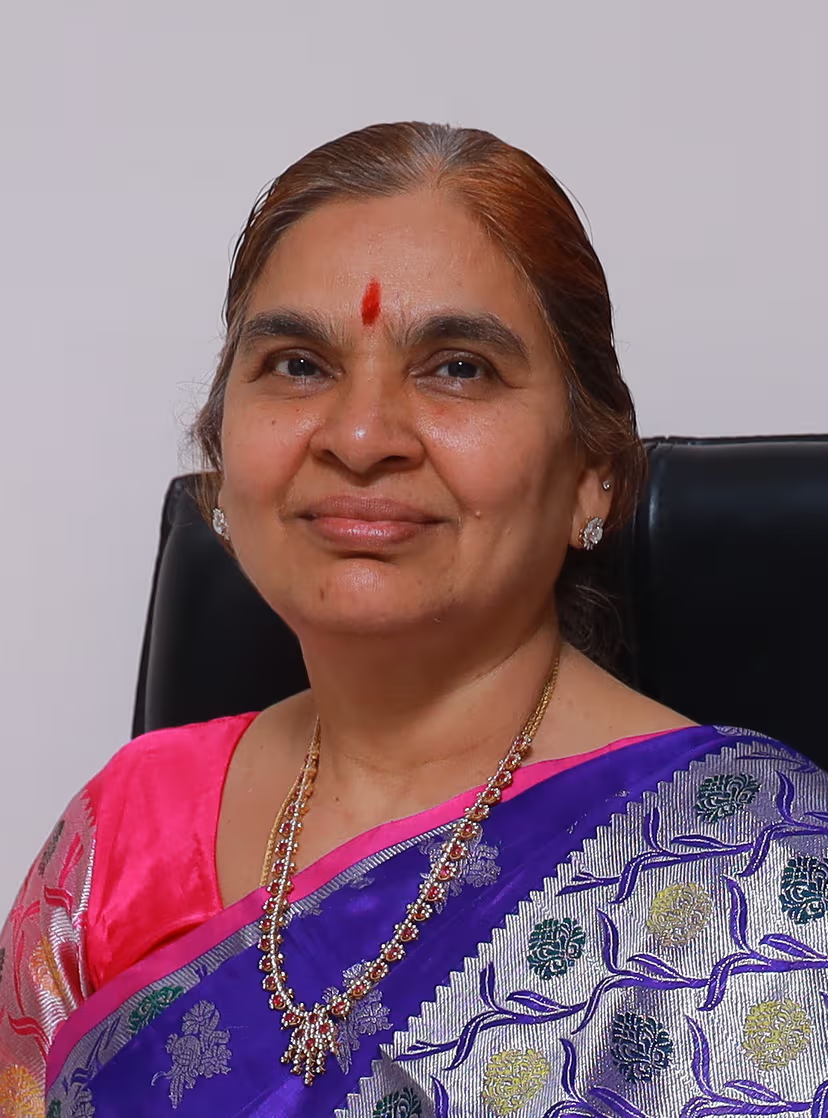
Smt. Ch. Suvarna Devi is The Philanthropic Heart of Viswa Sahu, helping keep every enterprise action anchored in compassion, restraint, and community responsibility.